
China and the phones of the British government: what we know about the alleged breach into Downing Street
British and international media in recent days have reported suspicions that state-backed Chinese actors monitored or compromised mobile phones of people connected to the highest levels of British politics for several years. The main targets were reportedly advisers and officials working in the immediate vicinity of Prime Ministers Boris Johnson and Rishi Sunak, including communications taking place within Downing Street.

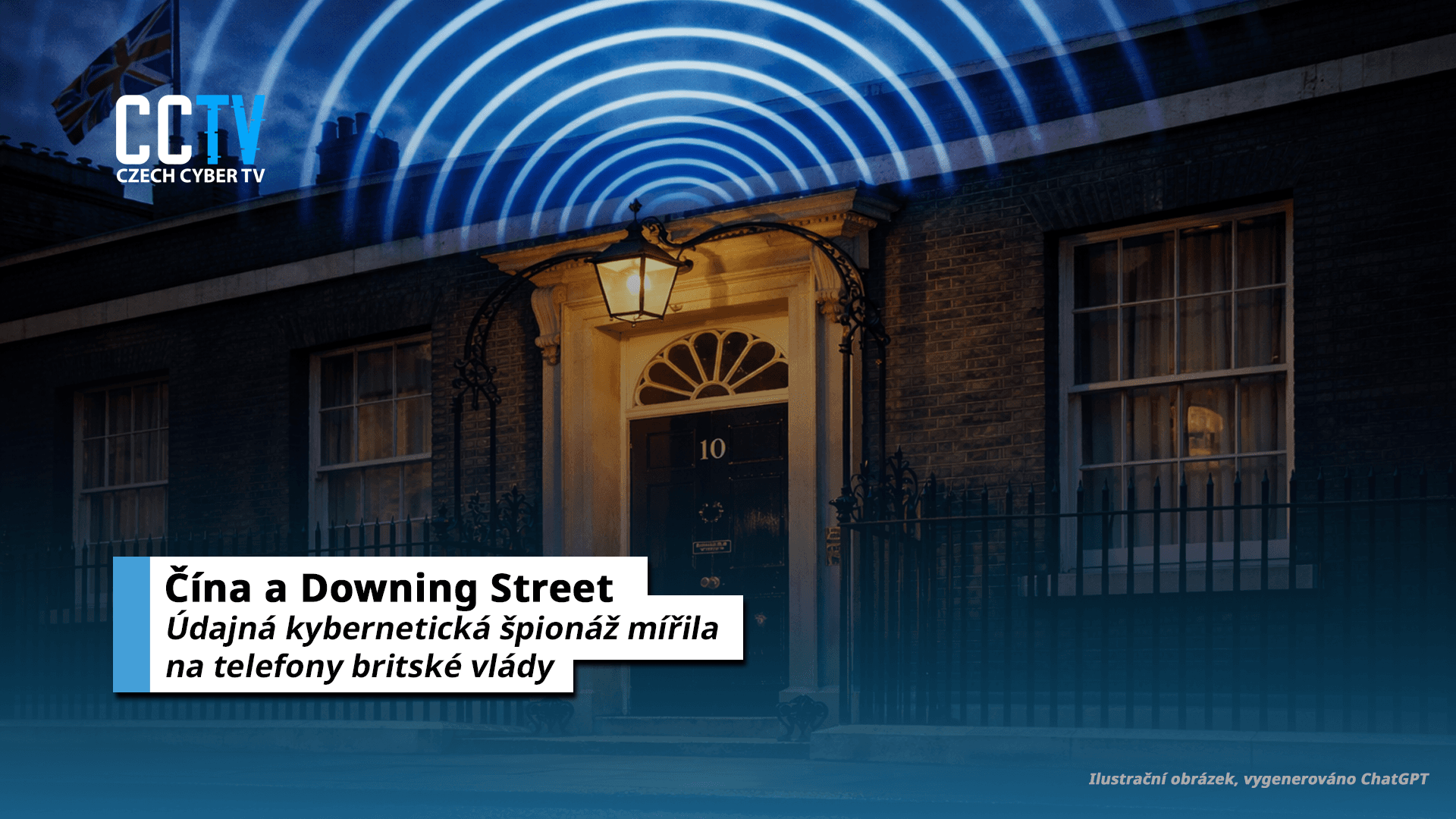
British and international media in recent days have reported suspicions that state-backed Chinese actors monitored or compromised mobile phones of people connected to the highest levels of British politics for several years. The main targets were reportedly advisers and officials working in the immediate vicinity of Prime Ministers Boris Johnson and Rishi Sunak, including communications taking place within Downing Street.
The source of these reports is primarily the British daily The Telegraph, whose findings were subsequently picked up by a number of other media outlets. Although many details remain undisclosed, the case fits into a long-term pattern of state cyber espionage aimed at political elites.
What the media describe
According to available information, the espionage activity was allegedly active roughly between 2021 and 2024. It was not necessarily aimed directly at the prime ministers themselves, but rather at their closest associates – people who have daily access to sensitive information, internal communications and strategic decisions.
The attacks are placed by the media into the broader context of global espionage activity attributed to Chinese state actors. In this context the label "Salt Typhoon" appears, used by part of the security community for one of the advanced persistent threats associated with Chinese intelligence apparatus.
From publicly available information it appears that the compromise did not have to occur solely through classic methods such as phishing or installing malicious code on devices. Some sources frame the case within a broader debate about vulnerabilities in the telecommunications environment, without disclosing specific technical details.
What is not yet known
Public information so far does not allow the exact technical scope of the attack to be determined. It is unclear whether the attackers accessed the content of communications, or mainly the metadata — i.e., information about who communicates with whom, when and from where. Metadata can be extremely valuable for intelligence even without knowledge of the message content.
It is also not confirmed that the personal phones of the prime ministers themselves were compromised. Available reports indicate that the primary targets were advisers and officials working in their immediate proximity, which nevertheless does not reduce the seriousness of the matter from a security perspective.
Reactions and broader context
Chinese authorities have denied the accusations and called them unfounded. Such statements are a long-standing standard in similar cases and also appear in responses to comparable allegations from the United States or European countries.
However, the whole case must be seen in a broader context. In recent years mobile phones have become one of the key targets of state cyber espionage. It is not only about calls or messages themselves, but about the combination of location data, social links and temporal behavior patterns that allows detailed mapping of decision-making processes and relationships.
Why it matters
Regardless of which specific details will be confirmed in the future, the case highlights several fundamental facts:
- mobile communications of political elites are a consistently highly attractive target,
- state actors increasingly focus not only on end devices but also on the wider communication environment,
- the boundary between cybersecurity and geopolitics is today practically inseparable.
From a cybersecurity perspective this is not an isolated incident, but another piece in the mosaic of what modern state espionage in the digital space looks like.